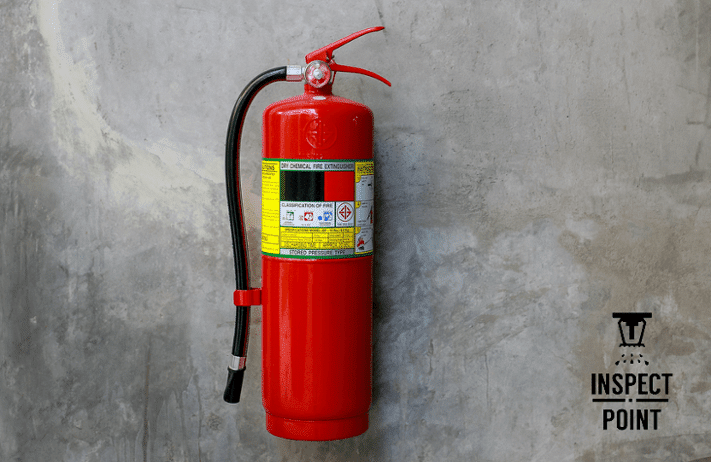
Portable fire extinguishers have the shortest inspection list in fire protection and the longest asset list. A sprinkler riser is one system with a page of tests. A hospital has a thousand extinguishers, each with its own tag, its own service history, and its own set of dates. The work is not hard. Finding the unit, knowing what it needs this visit, and writing it all down is where the day goes. This article covers what NFPA 10 requires, where extinguisher routes lose time, and how unit-level software with barcode scanning changes the job.
What NFPA 10 requires
NFPA 10, the Standard for Portable Fire Extinguishers, sets the intervals. Your AHJ adopts a specific edition, and the intervals below are the common baseline for the extinguisher types most contractors service.
- Monthly inspection. A visual check: the extinguisher is in its place, accessible, fully charged, with the seal and tamper indicator intact, no visible damage, and the tag or label legible. The owner can perform this, and many do. The inspection is recorded on the tag or in a record.
- Annual maintenance. A thorough examination by a qualified person, including the mechanical parts, the extinguishing agent, and the expelling means, with the tag updated and a record kept.
- Internal examination. Stored-pressure extinguishers on a 12-year hydrostatic interval, which is most mild-steel dry chemical units, are emptied and examined internally every six years and recharged. Nonrechargeable units are replaced instead. Extinguishers on a five-year hydrostatic interval get the internal look at that test, and cartridge-operated units are examined internally at annual maintenance.
- Hydrostatic test. The cylinder is pressure tested on an interval set by the extinguisher type and shell material: five years for water, wet chemical, foam, and carbon dioxide units and for dry chemical units with stainless steel shells; twelve years for dry chemical units with mild steel, brazed brass, or aluminum shells, and for clean agent and dry powder units.
| Extinguisher | Internal examination | Hydrostatic test |
|---|---|---|
| Dry chemical, stored pressure, mild steel, brazed brass, or aluminum shell | Every 6 years | Every 12 years |
| Dry chemical, stored pressure, stainless steel shell | At the 5-year test | Every 5 years |
| Dry chemical, cartridge-operated | Annually, at maintenance | Every 12 years |
| Water, wet chemical, foam (stored pressure) | At the 5-year test | Every 5 years |
| Carbon dioxide | Every 5 years | Every 5 years |
| Clean agent, halon | Every 6 years | Every 12 years |
| Nonrechargeable, any type | Not examined | Not tested; removed from service 12 years after manufacture |
Intervals follow the adopted edition of NFPA 10 (Tables 7.3.3.1 and 8.3.1). The shell material is on the nameplate; the software keys the schedule off the unit type and that date.
Every one of those intervals is per unit. Two extinguishers on the same wall can be due for different things in the same month, and the technician has to know which is which before touching either.
Where an extinguisher route loses time
The inspection itself takes a minute or two per unit. The overhead around it does not:
- Finding the unit and confirming it is the one on the list, in a building where units get moved.
- Reading a faded tag to work out when the last six-year or hydro was done.
- Writing the result on the tag, then again on a paper form, then again in the office.
- Noticing a unit that needs service and remembering to quote it after the route is over.
- Producing a report for the customer and the AHJ that lists every unit, not a count.
Multiply each of those by several hundred units and the overhead is most of the day.
Identify the unit first
The single biggest change is identifying each extinguisher with a barcode or QR code tied to its record. The technician scans the unit, the software shows what that unit needs this visit, and the result is recorded against that unit. No list to reconcile, no tag to decipher, no re-entry.
New York City made unit identification mandatory when the FDNY required every portable extinguisher in the five boroughs to carry a unique tag with anti-fraud features. That rule changed how inspections are conducted in the city, and it turned scanning from a convenience into the way the work gets done.
What unit-level software does with the scan
- Shows the due items. The unit's type, size, and service history decide whether this visit is a monthly, an annual, a six-year, or a hydro. The software knows; the technician does not have to.
- Records the result once. The result on the scan becomes the report line, the customer record, and the next due date.
- Opens the service work. A unit that fails, or is due for a six-year or hydro, becomes a service line while the technician is standing in front of it. Inspect Point's Swap & Loaner workflow handles the unit that goes to the shop and the one that takes its place, so the customer is never without coverage and the swap is documented.
- Quotes the work. The service lines become a proposal, priced from the extinguisher price book, before the truck leaves the lot.
- Reports every unit. The customer and the AHJ get a report that lists each extinguisher with its result and dates, which is what a fire inspector expects to see.
What that does to the route's economics
The same technician covers more units per day when the identification and the writing are gone, and more of the service work that the route uncovers gets quoted and sold, because it is quoted on the spot instead of remembered later. Extinguisher work has thin margins per unit; the profit is in volume per day and in the service revenue the route produces. Software that handles the scan, the schedule, and the quote is how a route earns both.
Inspect Point's extinguisher forms follow NFPA 10 with barcode and QR scanning, per-unit service history, Swap & Loaner, and proposals built from the route. The fire extinguisher trade page shows the workflow, and the barcode scanning article covers the scanning setup in more depth.
Common questions
Can the building owner do the monthly inspection?
Yes. NFPA 10 allows the owner or the owner's agent to perform the monthly visual inspection. Annual maintenance, internal examination, and recharging are done by a certified person, and hydrostatic testing by trained people with the test equipment and facilities NFPA 10 describes.
Do I need a barcode on every extinguisher?
Not by code, outside jurisdictions like New York City that require unique tags. But the identification is what makes unit-level records work, and the tags cost far less than the time they save on the first route.
What about extinguishers that fail?
A failed unit is taken out of service, documented, and either serviced or replaced. The customer needs coverage in the meantime, which is what a loaner program is for.
See Inspect Point run on your own inspections. A 30-minute demo, no commitment.