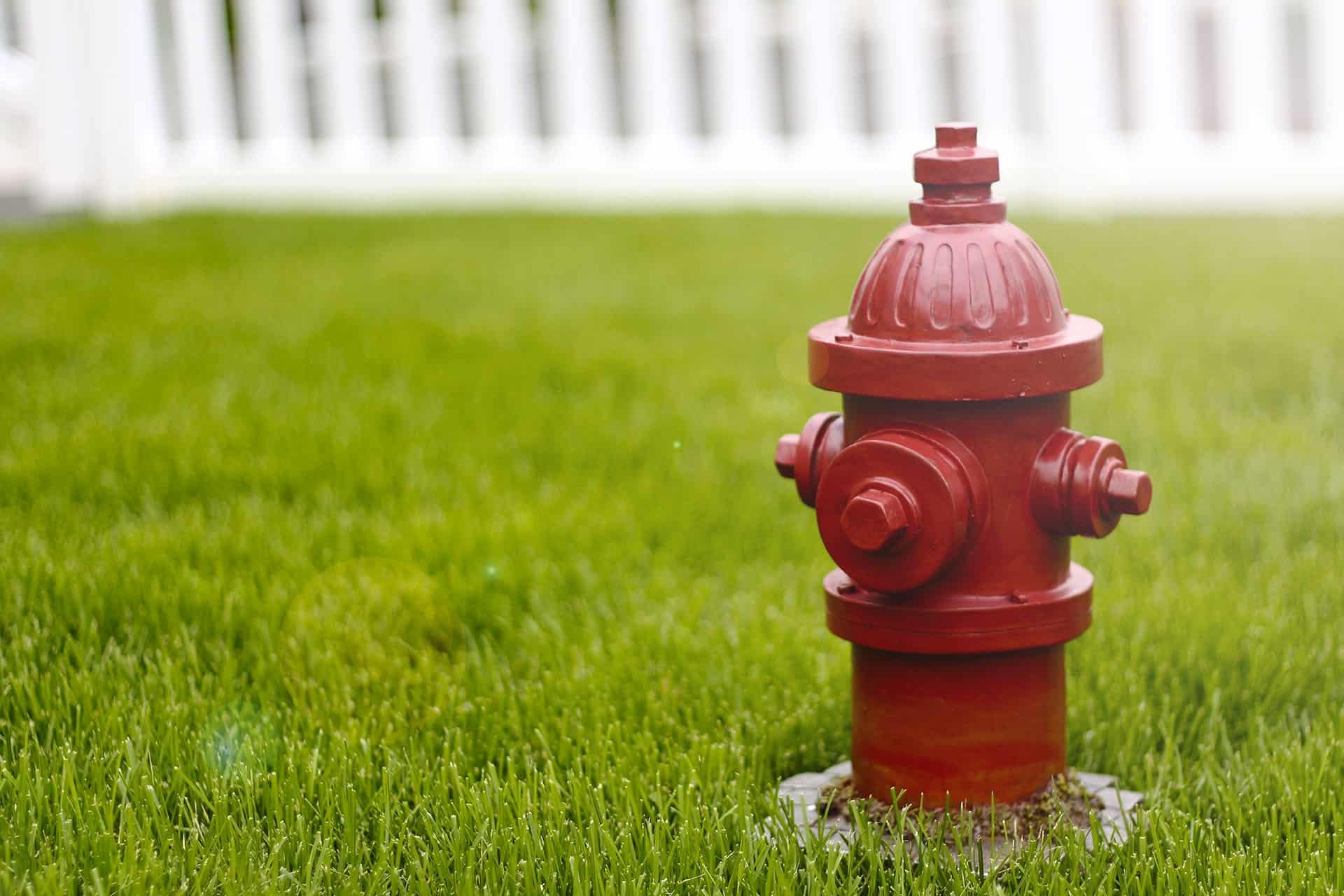
Fire hydrants are everywhere and thought about almost never. They stand on the corner, they turn up in cartoons, and they earn parking tickets. But a fire hydrant is the most visible piece of a city's fire protection: the connection between the water main under the street and the hoses that need it. This guide covers what a fire hydrant is, where it came from, the types in use today, what the colors mean, and how hydrants are inspected and tested so they work the night they are needed.
What is a fire hydrant?
A fire hydrant is a valved connection to a pressurized water main that lets firefighters draw water for hoses and pumpers. Most hydrants have a large steamer outlet for the engine's supply line and two smaller outlets for hand lines, a stem that opens the valve with a pentagon-shaped wrench nut, and a barrel that stands about three feet above the sidewalk. Public hydrants belong to the water utility or the municipality; private hydrants on campuses, industrial sites, and large commercial properties belong to the owner, and the owner is responsible for maintaining them.
Before the fire hydrant
Before piped water, a fire meant a bucket brigade from the nearest well, river, or cistern. Cities dug cisterns under the streets specifically for firefighting, and fire companies competed to reach them first. When cities laid wooden water mains in the 1600s and 1700s, firefighters gained a faster option: dig down to the main, bore a hole, and let the water fill the trench for pumping. Afterward the hole was closed with a wooden plug, the origin of the term "fire plug," and marked so the next crew could find it. London's rebuilding after the Great Fire of 1666 spread the practice, and it crossed to the American colonies with their first water systems.
Who invented the fire hydrant?
The above-ground post hydrant is usually credited to Frederick Graff Sr., chief engineer of the Philadelphia Water Works, around 1801, as that city built one of the first pressurized municipal water systems in the United States. The exact record is lost: the U.S. Patent Office burned in 1836 and took the early hydrant patents with it. Cast iron hydrants with the familiar barrel, bonnet, and outlets spread through the nineteenth century as cities piped water, and the basic design has changed less than almost any other piece of infrastructure since.
Types of fire hydrants
| Type | How it works | Where it is used |
|---|---|---|
| Wet barrel | The barrel is always full of pressurized water; each outlet has its own valve | Warm climates where freezing is not a risk, including much of California |
| Dry barrel | The main valve sits below the frost line; the barrel drains after each use so it cannot freeze | Most of the United States and Canada |
| Wall and standpipe hydrants | Outlets mounted on a building wall or a standpipe riser, fed from the building's fire main | Large buildings, industrial sites, and wharves |
| Flush hydrants | Outlets set in a box below grade to keep sidewalks and runways clear | Airports and some urban sidewalks |
What the colors mean
Hydrant colors are not decoration. NFPA 291, the Recommended Practice for Water Flow Testing and Marking of Hydrants, recommends that the barrel of a public hydrant be chrome yellow and the bonnet and outlet caps be painted by the flow the hydrant delivers at 20 psi residual pressure, or at the residual the water authority designates, so an arriving engine company knows what it is connecting to.
| Class | Cap and bonnet color | Rated capacity at 20 psi residual |
|---|---|---|
| AA | Light blue | 1,500 gallons per minute or more |
| A | Green | 1,000 to 1,499 gpm |
| B | Orange | 500 to 999 gpm |
| C | Red | Less than 500 gpm |
Private hydrants are often painted a different barrel color, commonly red, so crews know they are on a private main whose flow and maintenance the utility does not vouch for. Local practice varies, and some cities use their own schemes; the flow class markings are the part that carries across jurisdictions.
How hydrants are inspected and tested
A hydrant that will not open, that opens onto a dry main, or that delivers half the flow the color promises is a fire protection failure that nobody discovers until the fire. Public hydrants are inspected and flow tested by the water utility or the fire department on their own programs, with NFPA 291 as the method for flow testing and marking. Private hydrants fall under NFPA 25, the Standard for the Inspection, Testing, and Maintenance of Water-Based Fire Protection Systems, which requires an annual inspection and an annual flow test, opening the hydrant fully to confirm it flows and drains, plus annual lubrication of the stem, caps, and threads, and a check after any use. Winterized dry-barrel hydrants are checked for drainage so a barrel full of water cannot freeze and split. Hydrants on a private fire main are part of the same inspection program as the sprinkler systems the main feeds, and the results go on the same report the fire marshal reads. The sprinkler trade page covers how those inspections are recorded.
Why you cannot park in front of one
The hose that connects to a hydrant is large and stiff, and an engine company cannot work around a car. Most states set a no-parking zone of 10 to 15 feet on either side of a hydrant, and fire crews are permitted to move, or go through, a vehicle that blocks one. The ticket is the cheap outcome.
Common questions
What is the difference between a fire hydrant and a fire plug?
None today; "fire plug" is the older term from the wooden-main era and survives as slang in some regions.
How much water does a fire hydrant deliver?
It depends on the main. The color of the caps tells the class, from under 500 gallons per minute for a red-capped Class C hydrant to 1,500 or more for a light-blue Class AA.
Who maintains a hydrant on private property?
The property owner, under NFPA 25, usually through the fire protection contractor that inspects the site's sprinkler systems.
See Inspect Point run on your own inspections. A 30-minute demo, no commitment.