Inspection software for fire protection comes in two shapes, and the shape matters more than any feature on the comparison sheet. Form-based software digitizes the paper form. System-based software models the buildings, systems, and devices the forms describe, and generates the forms from that model. The first is easier to start with. The second is the one that still works when the company has three branches, four trades, and an AHJ that just adopted a new code year. This article lays out the difference and the questions that tell you which one a business needs.
Form-based inspection software
Form-based software is what it sounds like. You take the paper form or the fillable PDF you use today, load it into the software, and complete it on a tablet instead of a clipboard. The fields are yours, you can build custom forms for specific customers, and the barrier to entry is low.
The process stays what it was. The technician fills out a form. The form is the record. Everything that was hard about forms on paper is still hard:
- Who owns the forms, and who updates them when a code edition or an AHJ requirement changes?
- Is there a form for each system type and each inspection frequency, or one form that covers the annual and hopes the quarterly fits?
- How do you keep results consistent across technicians when every form is free text?
- If the company has more than one location, how do you manage code and form differences by jurisdiction?
- What happens to the data after the form is complete? Can you find every open deficiency across all customers, or only by opening each form?
Form-based tools are a reasonable first step off paper. They are a weak foundation for growth because the data lives inside each completed form: it comes back out as a copy of the form, not as device records the next inspection, the proposal, or the customer history can build on.
System-based inspection software
Fire protection is not like other field service trades. It is regulated, code-driven, and organized around systems with device-level records that have to be inspected on different frequencies under different standards. System-based software starts from that structure: each customer has buildings, each building has systems, each system has devices, and each device carries its type, its code year, its history, and its deficiencies.
The form is generated from the system. A wet pipe sprinkler system on an annual gets the NFPA 25 annual question set for the code year the AHJ enforces; the same riser on a quarterly gets the quarterly set. A fire alarm system with 300 devices gets a device-by-device inspection, not a form with a box for "devices tested." The report comes out of the results, formatted for the system type and the AHJ, without anyone re-entering it.
That structure is what makes the questions above answerable. Forms update when the question sets update. Consistency comes from the question set, not the technician's habits. A multi-branch company runs one data model with jurisdiction-specific code years. And every deficiency across every customer is a record you can search, report on, and turn into a proposal.
Code compliance and inspection frequency
Codes and standards revise every three to ten years, and jurisdictions adopt different editions on different schedules. A customer's insurer may require the current NFPA edition regardless of what the AHJ has adopted. Healthcare facilities add an accreditor, The Joint Commission or DNV, with its own reporting structure. Many AHJs want reports submitted through The Compliance Engine, IROL, or LivSafe rather than delivered on paper.
Against that, ask a form-based tool how many versions of the annual fire alarm form it holds, and who keeps them current. Ask a system-based tool the same question and the answer is that the question sets are maintained centrally as editions change, and the form the technician sees is the right one for the building.
Standardization
The hidden cost of forms is variance. Two technicians inspect the same system and write different things because the form let them. A supervisor cannot compare results across the fleet. A new hire learns the company's forms instead of the company's standard. System-based software enforces the standard in the question set, so every technician inspects the same system the same way and the office reads one kind of result.
| Capability | Form-based | System-based |
|---|---|---|
| Device history across years | Search past forms by hand | On the device record |
| Question set by system type and code year | One form per system, edited by hand | Generated from the system and the adopted edition |
| Deficiency to proposal | Retyped in the office | The finding becomes the proposal line |
| Several technicians on one building | Separate forms, merged later | One inspection, live |
| Reports for the AHJ and the accreditor | Separate documents | One inspection, two report formats |
How to decide
- One trade, one location, a handful of customers, forms that rarely change: form-based software will get you off paper and may be enough for a while.
- Multiple system types, inspection frequencies that differ by system, more than one jurisdiction, or growth plans: system-based software is the foundation, and the earlier the switch the less history there is to migrate.
- Deficiencies as revenue: if the plan is to turn found deficiencies into proposals, the deficiency needs to be a record with a photo, a code reference, and a price, not a line on a form. That is native to a system-based tool; in a form-based one it is a separate step, where it is possible at all.
A solution built for fire protection
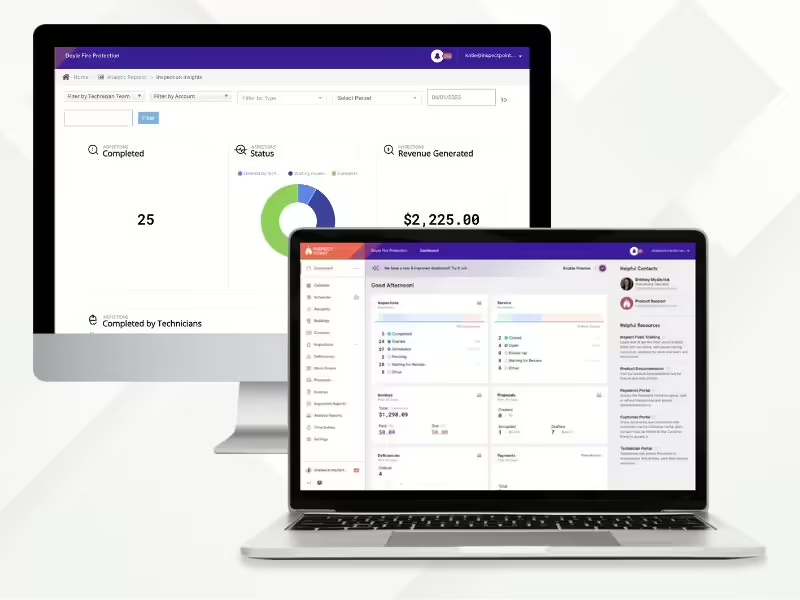
Inspect Point is system-based. Buildings, systems, assets, and deficiencies are the data model; the forms are generated from it by system type and code year; the report and the proposal come out of the same record. The inspections feature page walks through the device list and the forms, and the buyer's guide compares the options in the market if you are choosing between platforms.
See Inspect Point run on your own inspections. A 30-minute demo, no commitment.